Wednesday, 21 December 2011

War and Politics

I'm not sure if in this image that I'm going to combined both subject points yet.


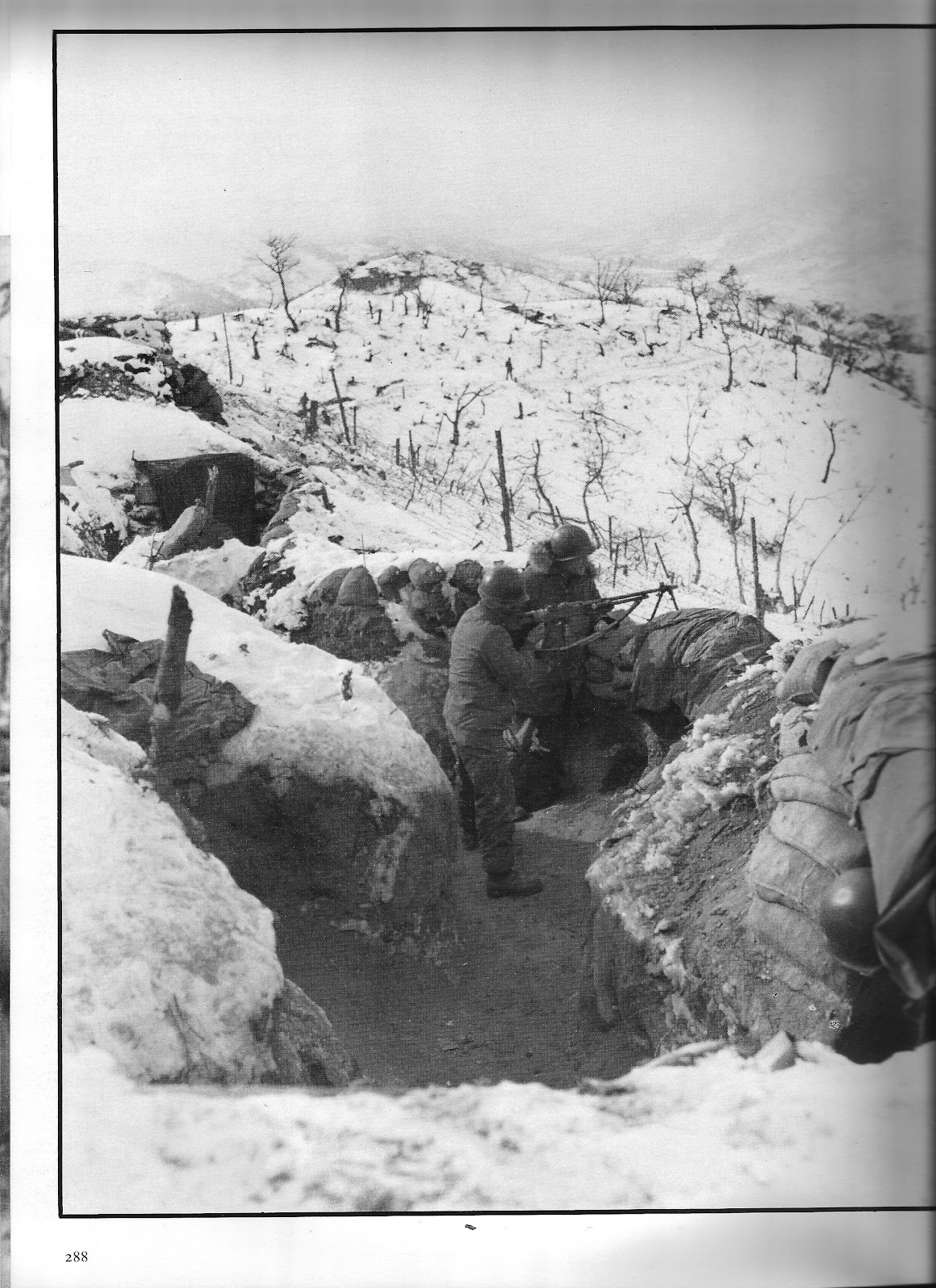
The first thing thing I'm going to do is take a look at the Korean war which took place around 1950 - 53.  As well as maybe taking a look at the cold war, with the communist witch hunt in america.

Information on the Korean war

http://www.history.com/topics/korean-war


The Red Scare

A Propaganda War

Embedded in the propaganda of the time was the idea that the nuclear family was what made Americans superior to the Communists. American propaganda showed the horrors of Communism in the lives of Russian women. They were shown dressed in gunnysacks, as they toiled in drab factories while their children were placed in cold, anonymous day care centers. In contrast to the "evils" of Communism, an image was promoted of American women, with their feminine hairdos and delicate dresses, tending to the hearth and home as they enjoyed the fruits of capitalism, democracy, and freedom.


http://www.pbs.org/wgbh/amex/pill/peopleevents/p_mrs.html


As the Cold War between the Soviet Union and the United States intensified in the late 1940s and early 1950s, hysteria over the perceived threat posed by Communists in the U.S. became known as the Red Scare. (Communists were often referred to as "Reds" for their allegiance to the red Soviet flag.) The Red Scare led to a range of actions that had a profound and enduring effect on U.S. government and society. Federal employees were analyzed to determine whether they were sufficiently loyal to the government, and the House Un-American Activities Committee, as well as U.S. Senator Joseph R. McCarthy, investigated allegations of subversive elements in the government and the Hollywood film industry. The climate of fear and repression linked to the Red Scare finally began to ease by the late 1950s.

http://www.history.com/topics/red-scare


Scans of pages and photo's taken from Two war book from My home 


These pages are taken from "Americans At War" Author W.J.Koenig Bison Books


These images are taken from the book

"WAR Armed Conflicts of the 20th Century Outside the Two World Wars"

Author Christopher Chant WHSMITH Exclusive Books


Women of 50's

In this time women were viewed as been full time parents, with the sole purpose of raising and maintaining their family.

I was thinking of creating one the images that got this point across. As its a subject that many might over look. I have an idea on how i could go about creating this image and i was thinking of having an image of typical house wife. who has sort of a speak bubble coming form her head and she's dreaming of been else were, having a career and doing things that society says is wrong for a women.

How i would go about this i'm not sure yet, but i'm considering using the similer style to what i'm going to do for the Marilyn Monroe images. Using hand drawings for the images in her head.

I was already aware of what it was like for women in the 50's to a basic level, so below i've got article below on the subject. I need to find more

Modern mothers placed their parents in nursing homes; old-fashioned mothers took their parents in at the expense of their own "important" nuclear family. A modern mother was not supposed to have friends, a job, or anything or anyone that would take attention from her husband and children. She was also supposed to grant early independence to her male child. It is no wonder that many women who believed in this advice and put it into practice ending up abusing alcohol or tranquilizers over the course of the decade.

Article Source: http://EzineArticles.com/3375411

Update


The "M.R.S." Degree
In the 1950s, women felt tremendous societal pressure to focus their aspirations on a wedding ring. The U.S. marriage rate was at an all-time high and couples were tying the knot, on average, younger than ever before. Getting married right out of high school or while in college was considered the norm. A common stereotype was that women went to college to get a "Mrs." (pronounced M.R.S.) degree, meaning a husband. Although women had other aspirations in life, the dominant theme promoted in the culture and media at the time was that a husband was far more important for a young woman than a college degree. Despite the fact that employment rates also rose for women during this period, the media tended to focus on a woman's role in the home. If a woman wasn't engaged or married by her early twenties, she was in danger of becoming an "old maid."


Single and Pregnant
If remaining single in American society was considered undesirable, being single and pregnant was totally unacceptable, especially for white women. Girls who "got in trouble" were forced to drop out of school, and often sent away to distant relatives or homes for wayward girls. Shunned by society for the duration of their pregnancy, unwed mothers paid a huge price for premarital sex. In reality young women were engaging in premarital sex in spite of the societal pressure to remain virgins. There was a growing need for easy, safe, effective, reliable and female-controlledcontraceptives.


Large Families
Not only did most married women walk down the aisle by age 19; they also tended to start families right away. A majority of brides were pregnant within seven months of their wedding, and they didn't just stop at one child. Large families were typical. From 1940 to 1960, the number of families with three children doubled and the number of families having a fourth child quadrupled.


Stay-at-Home Moms
This was also the era of the "happy homemaker." For young mothers in the 1950s, domesticity was idealized in the media, and women were encouraged to stay at home if the family could afford it. Women who chose to work when they didn't need the paycheck were often considered selfish, putting themselves before the needs of their family.


Decades of Childbearing
But even for happy homemakers, pressures were mounting. In a departure from previous generations, it was no longer acceptable for a wife to shut her husband out of the bedroom. Starting in the 1950s sex was viewed as a key component of a healthy and loving marriage. Without an effective female-controlled contraceptive, young wives faced three decades of childbearing before they reached menopause.


The Pill Welcomed
By the late 1950s, both single and married American women were ready and waiting for a new and improved form of birth control. When the Pill was introduced, the social factors affecting women's reproductive lives contributed significantly to the warm reception women across the country gave the Pill.
http://www.pbs.org/wgbh/amex/pill/peopleevents/p_mrs.html


Example of 1950's house wife, both cartoon and real 


This is another image that would good to use 

I could draw the image my self a similar style to this 


An example of the art style i want to use for the imaginations of 50's housewife

This would be a good image to use as she appears to some were else


Advert example of 50's house wife's 
This advert for hot point is quite good image 


This image could another good one to use 


http://www.flickriver.com/photos/28153783@N08/popular-interesting/

Tuesday, 20 December 2011

Nuclear Test House

A iconic scene I was thinking of having for one image was to have the fake family of the nuclear test site. I was playing with the idea of having the mannequins colourized or de-colourized from a blast going of in the background.

I've found images that are perfect example of dummies i was looking for and they took place in
1953.


http://www.theatlantic.com/infocus/2011/05/when-we-tested-nuclear-bombs/100061/

Monday, 19 December 2011

Technology

For a image that looks at Tech of the time period i was thinking of including satellite explore 1, medicine that came about and the first domestic airline. For this i thinking of having images of the cars and boom of domestic house hold items that came about at that time.

(Update 20/12/11)

 In 1956 Federal Aid Highyway Act was signed, for this i was thinking of having a image of a car driving coming down one of the highways, with one of the highway signs next to the car. The image for this will have to be drawn by hand.


The interstate Highway system is created Jun 29, 1956

President Dwight Eisenhower signed the Federal-Aid Highway Act of 1956. The bill created a 41,000-mile National System of Interstate and Defense Highways that would, according to Eisenhower, eliminate unsafe roads, inefficient routes, traffic jams and all of the other things that got in the way of “speedy and being safe.


http://www.modot.org/interstate/MissourisInterstateHistory.htm


http://csudigitalhumanities.org/exhibits/exhibits/show/interstate-highways/introduction

http://www.dipity.com/apatterson/Modern-History-OGT-Timeline/?mode=fs


http://www.democratsforprogress.com/2011/06/30/history-teaches-june-29/

http://www.antiwar.com/blog/2006/06/27/defense-highways/


map


Opening 


Update ( 21/12/11)

In 1958 the Americans sent their first satellite into orbit and its name was the Explore 1.

I'm going to have a image of the Explore 1 and try to incorporate the orbit it did. I'm also considering add smaller versions of its siblings that were sent up the same year. I going to try and get images that show happened to each Explore. Explore 1 burned out 1970's, Explore 2's rocket failed to ignite, Explore 3 and 4 were successful, but sort lived and Explore 5 failed due its rocket pod colliding with top section in separation.

For more information on Explore 1, paragraph taken from NASA website posted below

Explorer 1 was the first satellite launched by the United States when it was sent into space on January 31, 1958. Following the launch of the Soviet Union's Sputnik 1 on October 4, 1957, the U.S. Army Ballistic Missile Agency was directed to launch a satellite using its Jupiter C rocket developed under the direction of Dr. Wernher von Braun. The Jet Propulsion Laboratory received the assignment to design, build and operate the artificial satellite that would serve as the rocket's payload. JPL completed this job in less than three months.

http://www.nasa.gov/mission_pages/explorer/explorer-overview.html

http://www.youtube.com/watch?v=bHYyzLu1Gew


For the image I want to create, I want to do something similar to this, but include its siblings


http://history.nasa.gov/sputnik/galleryex.html
http://tetrahedral.blogspot.com/2011/01/celebrating-53-years-of-american-space.html


Update ( 22/12/11)


Polio Vaccine 


On this day in 1954, the Salk polio vaccine field trials, involving 1.8 million children, begin at the Franklin Sherman Elementary School in McLean, Virginia. Children in the United States, Canada and Finland participated in the trials, which used for the first time the now-standard double-blind method, whereby neither the patient nor attending doctor knew if the inoculation was the vaccine or a placebo. On April 12, 1955, researchers announced the vaccine was safe and effective and it quickly became a standard part of childhood immunizations in America. In the ensuing decades, polio vaccines would all but wipe out the highly contagious disease in the Western Hemisphere.

http://www.history.com/this-day-in-history/polio-vaccine-trials-begin


http://poliovaccine.umwblogs.org/

First domestic airline

Of all the airlines in the United States, Pan American, which the U.S. government considered its “chosen instrument” to represent the American commercial air fleet abroad, was undoubtedly a pioneer in embracing jet aviation. Juan Trippe, the airlines' legendary chief executive officer, had early on expressed a keen interest in operating a passenger jet service capable of flying nonstop across the North Atlantic. Having seen the bright promise of the British Comet fade, Trippe played off two of the biggest domestic airplane builders, Boeing and Douglas. Both companies vied to appeal to Pan American's needs and offered the Boeing 707 and DC-8, respectively. In October 1955, Trippe signed contracts with both companies to buy 45 of these jets (20 707s and 25 DC-8s). Exactly two years later, Boeing rolled out the first operational 707, a Boeing 707-120, and on October 26, 1958, amid much fanfare, Pan American inaugurated its New York-London route, ushering in a new era in the history of passenger aviation. On the very first flight, which made a stopover in Newfoundland, there were 111 passengers, the largest number ever to board a single regularly scheduled flight. Coach fares were $272, about the same as one would expect to pay for a piston-engine flight across the Atlantic.
http://www.centennialofflight.gov/essay/Commercial_Aviation/Opening_of_Jet_era/Tran6.htm


 http://www.flickriver.com/photos/christianmontone/tags/airlines/


http://pzrservices.typepad.com/vintageadvertising/2008/08/northwest-airli.html


http://b377.ovi.ch/pcs/aoa.html


http://hawaii.gov/hawaiiaviation/aviation-photos/1950-1959/honolulu-international-airport/pan-americ